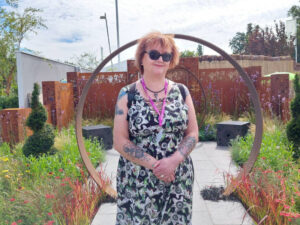
Blog: A productive, pretty and wildlife-friendly space
You don’t need an allotment or dedicated patch to grow fruit, veg and herbs – here’s how to grow crops in your front garden. My garden is only about 7m sq at the front, not a lot of space.
I’ve written about the blackcurrants I grow here and this year, I’ve picked over 2kg of fruit from the three Ben More bushes. There’s more to ripen, and this is from unfed and unwatered plants! However, it’s not all about the fruit.
When I started this experiment way back in 2012, I knew I wanted an easy-care space but one that was still ornamental and attractive to wildlife. Also, as we live on a busy road, I didn’t want it to look too obviously like a productive area. As the garden is hidden under six inches of gravel, it’s a nightmare to plant into. However, once they’ve become established, the gravel acts as a water-retaining and weed-suppressing mulch.

How to grow crops in your front garden – ornamentals I kept
- Pink weeping cherry (Prunus): You just can’t beat that uplifting spring blossom!
- Golden dogwood (Cornus alba Aurea): Golden leaves, early summer cream flowers, autumn colour and red stems in winter.
- Purple barberry (Berberis thunbergii atropurpurea): Excellent deep purple contrasting foliage.
- Bear’s breeches (Acanthus mollis): Large glossy leaves with white/purple flowers.
- Roses: A cream climber, supposed to be Harlequin but clearly isn’t! Totally outgrown its space and upsets the postman. There’s also an ancient red floribunda I don’t have the heart to get r
- A white double clematis I rediscovered tidying up the garden last week – thought it was dead!

Edible plants I have added
- Cardoons: fabulous big grey serrated leaves rising to 2m with an edible flowerhead. It’s a close relative of the globe artichoke, which you could use instead.
- Bronze fennel: The aniseed smell and feathery foliage is a delight. Great with prawns and fish.
- Chives: Pretty, delicious and loved by pollinators.
- Golden marjoram: Wonderful edger with pink flowers that bees adore.
Plants for wildlife
- Holly (Ilex aquifolium): A British native, planted for its berries and shelter for the birds.
- Elder: A self-seeder and another native. Use the flowers and/or berries for drinks and preserves. Very pretty and another great choice for pollinators and birds. There’s a host of folklore surrounding the elder – Trees For Life is an excellent resource.
- Foxgloves: Guess what, another self-seeder! Striking for shade, growing up through ivy (don’t eat these, they’re both poisonous, as are the leaves and fruit of elder, unless cooked.
- Ivy: Paddy’s Pride, Glacier and the native green variety cover shady areas and the gateposts.
- Cotoneaster horizontalis: Another self-seeder, it’s used as larval food plant by several moths and butterflies. It’s helpful for bees during the June gap. The red berries are loved by blackbirds and relatives.

How to grow crops in your front garden – maintenance
As I said, I wanted this as easy care as possible. Weed-suppressant plants are the key, with ivy under the deep shade of the holly, elderflower and Fatsia. On the sunny side of the path, there’s a cheery mix of golden marjoram, chives, self-seeded Alchemilla mollis and a random Heuchera! The bronze fennel pushes through all this. Of course, anything that’s not self-seeded and is newly planted needs to be watered, fed and taken care of until it’s established.
As the marjoram, chives and fennel are herbs, just pick what you need. Of course, you can harvest the lot, but you’ll lose the ornamental aspect. Let the fennel flower (lovely yellow umbrellas) and set seed, which you can also use. Cut the marjoram back in late winter for the brightest spring foliage.
End of June is the usual ripening time for the blackcurrants. You can usually do this in a couple of batches. I have never had the heart to cut the cardoons as they look so lovely, but they’re a delicacy in France!